
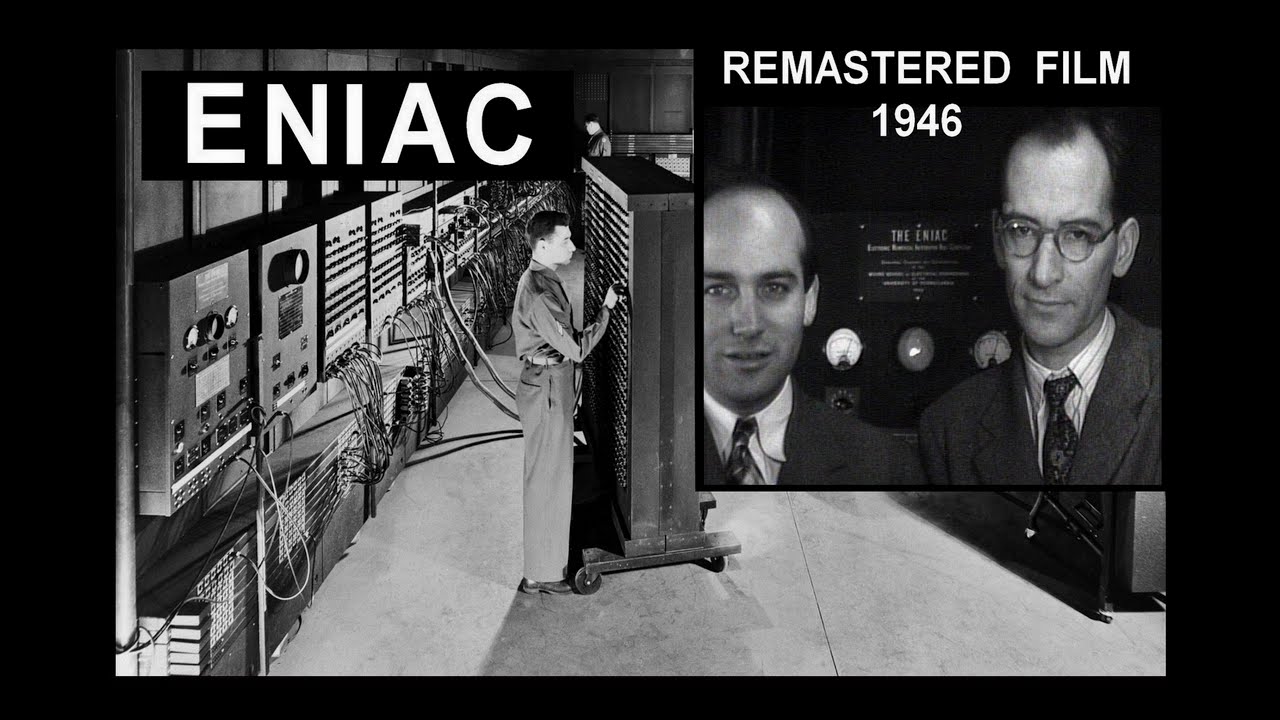


When I stumbled upon the first footage of ENIAC, the world’s first general-purpose electronic computer, I was captivated by the sheer magnitude of the machine and the intricacies involved in its operation. Little did I know, its birth laid the groundwork for our modern digital age—and yet, what struck me most was the story of the women who were the unseen architects of its programming.
The Dawn of Computing: The Birth of ENIAC
In February nineteen forty-six, a momentous announcement changed the landscape of technology forever. The U.S. government revealed the existence of a revolutionary computer known as ENIAC, short for Electronic Numerical Integrator and Computer. It wasn’t just another piece of machinery; it represented a giant leap in computing technology.
ENIAC's Introduction
Imagine the world back then. Computers as we know them today were mere dreams. However, ENIAC was introduced to the public as a product of years of secretive development under the auspices of the U.S. Army and the University of Pennsylvania. The project kick-started back in nineteen forty-three, when John Mauchly and Jay Presper Eckert, two brilliant minds, began their mission at the Moore School of Electrical Engineering.
The Significance of ENIAC
- ENIAC's full name reflects its purpose: it was built to perform complex calculations that would normally take humans a vast amount of time.
- Its primary objective was to aid the military in computing artillery firing tables, reducing computation time from twelve hours to just thirty seconds.
This colossal machine weighed over thirty tons and consisted of thousands of vacuum tubes, resistors, and capacitors. The room housing ENIAC was specially air-cooled to prevent overheating. Can you imagine the sound of all those tubes working simultaneously?
The Role of Collaborators
Critical to ENIAC's success were not only the visionary engineers but also the crew of women programmers who contributed their skills. In an era where such roles were rare for women, they created detailed programming strategies using block diagrams. Their contributions were essential, showcasing that behind every technological advancement, there are often unsung heroes.
ENIAC was hailed as a 'giant brain' by the media.
It’s fascinating to think how the media embraced this innovation, coining such a memorable phrase. The combination of innovative design and rapid computation made ENIAC not just a machine, but a sensation.
The partnership of the U.S. Army and the University of Pennsylvania solidified ENIAC's development as a national project. Together, they moved from the idea stage to creating an operational giant that would set the foundation for future advancements in computing.
The Road Ahead
Bell and whistle alerts were set as ENIAC reached operational status on July twenty-ninth, nineteen forty-seven. It was a major breakthrough for the computing world. Yet the project was just beginning. ENIAC would lead to more innovations, demonstrating how a single invention can ripple through time to create a new era.
Isn't it incredible how a simple idea, nurtured by the collaboration of remarkable minds, can change the course of history?
Women Behind the Wires: The Programming Pioneers
When we think of the early days of computing, names like John Mauchly and Jay Presper Eckert often come to mind. However, let’s take a moment to shine a light on the incredible women who programmed ENIAC. These pioneering figures did more than just help; they were the backbone of this groundbreaking project.
Highlighting Contributions
Originally, ENIAC (Electronic Numerical Integrator and Computer) was a colossal machine, weighing over thirty tons. It was built to tackle complex numerical problems. But who made sure this machine could even be used? The women programmers played a crucial role. They transformed complex theoretical plans into practical applications through hard work and ingenuity.
Programming Methods: Switches and Wires
Programming ENIAC wasn’t like programming today. Back then, there were no software manuals. Instead, these dedicated women created detailed programming plans using block diagrams and logic diagrams. They often relied on personal communication with engineers, which was key to their success. Think about it—this was a time when programming involved connecting wires and switches to craft complex algorithms. It was labor-intensive and required absolute precision.
Recognition of the Pioneers: 1997 Induction
In 1997, the enormous contributions of these female programmers were finally recognized. Six women were inducted into the Women in Technology Hall of Fame. This moment was long overdue. As one quote aptly states,
“Without the women programmers, ENIAC would not have operated as intended.”How true that is! Their hard work laid the foundation for future advancements in technology.
Personal Stories
Among them were incredible talents, each with their unique story. Their dedication not only ensured ENIAC's operation but also inspired generations of female engineers and programmers to come. Their role was pivotal not just for ENIAC but for the broader scope of computing. Imagine being part of such significant history!
As we reflect on this legacy, it's essential to appreciate the remarkable impact these women had. They weren't just side players; they were necessary for the machine to function. It’s a testament to the power of teamwork and innovation in a time dominated by men. What else could these brilliant minds have achieved, if given more recognition earlier? We can only wonder!
A Technological Marvel: The Dimensions of ENIAC
When we think about the evolution of computers, ENIAC stands as a towering figure. It's not just a machine; ENIAC is a testament to ambition and innovation. Let’s take a closer look at its physical specifications, compare it with other machines of its time, and appreciate the significance of its incredible computing speed.
Physical Specifications of ENIAC
ENIAC was, quite simply, massive. It weighed over thirty tons—imagine trying to move that! It was built using a staggering eighteen thousand vacuum tubes. This is a lot of parts!
- Size: Over thirty tons
- Components: Eighteen thousand vacuum tubes
- Other facts: It included seventy thousand resistors and ten thousand capacitors.
| Specification | Value |
|---|---|
| Weight | Over 30 tons |
| Vacuum Tubes | 18,000 |
Comparison with Other Machines of the Time
Take a moment to consider what computers looked like back in the 1940s. They were primarily electromechanical and significantly slower. In fact,
The computing speed of ENIAC was one thousand times greater than that of electromechanical machines.Now that’s a remarkable difference! This leap in speed wasn't just about numbers; it set the stage for what computers could do.
The Significance of Its Computing Speed
Why does speed matter? Well, for ENIAC, it meant processing complex calculations for military applications in scant seconds instead of hours. Initially used for artillery firing tables, it brought computation time down from twelve hours to a mere thirty seconds. Talk about game-changing!
ENIAC wasn't just big on size, it redefined what's possible in computing. The technology was groundbreaking, pushing boundaries and inspiring a generation of computers that followed.
In summary, ENIAC wasn't just a revolutionary machine in terms of physical size; it was a marvel of engineering that significantly outpaced its predecessors. The journey of technology was forever altered by its inception.
Beyond Artillery: ENIAC’s Revolutionary Applications
ENIAC was a game changer. Initially designed for a focused purpose, it quickly evolved into a versatile tool across multiple domains. Let’s explore how it transformed the landscape of computing.
1. ENIAC's Original Purpose
First and foremost, ENIAC was built for the U.S. Army. Specifically, it was intended to generate artillery firing tables, which were critical for accurate military operations. Before ENIAC, these calculations were time-consuming.
Can you imagine waiting 12 hours for a single ballistics calculation?
2. Diverse Applications in Scientific Fields
Once ENIAC was operational, it wasn’t long before its capabilities stretched beyond military usage. It found applications in:
- Weather Prediction: Predicting atmospheric conditions became much easier.
- Atomic Energy Calculations: Essential for understanding complex nuclear processes.
- Cosmic Ray Studies: Helping researchers dive deeper into our universe.
- Wind Tunnel Design: Enhancing aerospace engineering practices.
With such a broad scope, ENIAC set a precedent for computers' future roles in research and development.
3. Impact on Calculations and Research Efficiency
The efficiency boost from ENIAC was staggering. Imagine reducing the time for complex calculations from 12 hours to just 30 seconds. That's right!
This speed not only revolutionized how calculations were done but also opened new avenues for research.
“ENIAC's capabilities stretched beyond military usage, paving the way for today's computational science.”
Thanks to its fast processing, scientists and researchers could focus more on analysis rather than computation. This led to significant advancements in various scientific fields.
Visualizing ENIAC's Impact
Below is a chart illustrating the dramatic change in calculation time due to ENIAC:
| Task | Previous Time (Hours) | ENIAC Time (Seconds) |
|---|---|---|
| Ballistics Calculation | 12 | 30 |
In summary, ENIAC was more than just a military tool; it was an essential innovator that laid the groundwork for the computing era we know today. Its journey from artillery tables to broad scientific application embodies the immense possibilities technology offers. The legacy of ENIAC echoes through the technology we use daily.
The Legacy of ENIAC: A Look to the Future
The story of the ENIAC (Electronic Numerical Integrator and Computer) is not just about a machine; it's a tale of innovation, teamwork, and revolution in technology. Knowing that ENIAC was the world's first large-scale digital electronic general-purpose computer is fascinating. It laid the groundwork for the computers we use today. But how did we transition from ENIAC to today’s advanced models?
From ENIAC to Subsequent Models
After ENIAC, the evolution didn't pause. It marched onward with models like EDVAC, which introduced stored-program architecture. This innovation aimed to make programming easier and faster. I often wonder: how much easier would our lives be now without these breakthroughs? ENIAC's transition set a path toward modern computing.
Additionally, the formation of the Electronic Control Company (later known as EMCC) by Eckert and Mauchly marked a significant milestone. EMCC became the first company dedicated exclusively to producing electronic digital computers. Imagine being at the forefront of such a monumental shift!
The Birth of UNIVAC
The roots of UNIVAC can be traced back to the incredible work done with ENIAC. After EMCC was acquired by Remington Rand, the UNIVAC Division blossomed. The UNIVAC I, launched in the early 1950s, showcased superior computing power. It's intriguing to think how ENIAC’s legacy continued through the innovation and practical applications of UNIVAC.
ENIAC’s Lasting Influence on Modern Computing
Reflecting on how ENIAC laid the groundwork is striking. The programming methods created by the women who worked on ENIAC, despite challenges, paved the way for the sophisticated development tools we use now. Their tenacity stands as a testament to enduring revolutionary change.
“ENIAC's legacy continues to influence computer technology as we know it today.”
Today, we find a portion of ENIAC still residing at The University of Pennsylvania among other historical sites. This preservation is a clear nod to the machine's significant contributions. Remember, every time we touch a computer screen or click a mouse, we stand on the shoulders of ENIAC's legacy.
In conclusion, the journey from ENIAC to modern computing is a fascinating narrative. It encompasses early innovation, profound evolution with EMCC and UNIVAC, and the steadfast influence of these developments on our daily technology. As we advance further into this digital age, let’s be inspired by the pioneers who made it all possible. Their work continues to resonate in the devices we rely on today.