



Have you ever wondered how time flows differently across the globe and how a single moment can belong to many clocks? Picture booking a conference call between New York, Paris, and Tokyo—getting the timing right can feel like cracking a secret code. This blog dives into the maze of world time zones, from their historical quirks to modern-day digital tools that make managing local times easier than ever.
Understanding the Patchwork of World Time Zone Boundaries
The concept of time zones is central to how people navigate the world, plan travel, and conduct business across continents. A World Time Zone Map reveals a fascinating patchwork, where lines of longitude and political borders intersect to create a complex system of time zone boundaries. While the Earth is divided into 24 primary time zones—each theoretically spanning 15 degrees of longitude—the reality is far more intricate.
The Foundation: 24 Primary Time Zones
The division of the globe into 24 time zones is based on the Earth's rotation, with each zone representing one hour of the 24-hour day. In theory, these zones should be evenly spaced, with boundaries following lines of longitude. The UTC offset system, ranging from UTC-12 to UTC+14, provides a standardized way to express the time difference from Coordinated Universal Time (UTC).
However, a quick glance at a world time zone map shows that these boundaries are rarely straight. Instead, they zigzag around countries, islands, and even cities, reflecting a blend of scientific logic and human decision-making.
Irregular Boundaries: The Influence of Politics and Geography
Time zone boundaries often follow national borders, but not always. Political decisions, historical events, and practical needs have shaped the current map. For example, Spain, geographically aligned with Greenwich Mean Time (GMT), observes Central European Time (CET) for historical reasons. Similarly, China, despite spanning five geographical time zones, uses a single time—China Standard Time (UTC+8)—across the entire country, from Beijing to Guangzhou.
Peter Smith, a time geography expert, notes:
"Time zones are a blend of science, history, and politics, making every boundary a story in itself."
This patchwork is visible in cities like Abu Dhabi, Berlin, London, New York, and Tokyo, each situated in different time zones but sometimes sharing the same UTC offset due to local decisions.
Non-Standard Offsets: Half-Hour and Quarter-Hour Time Zones
While most time zones are offset from UTC by whole hours, several regions use half-hour or even quarter-hour differences. These unique offsets are often highlighted on world time zone maps with diagonal stripes or special markings.
- India Standard Time (IST): UTC+5:30. India, including cities like Delhi and Mumbai, uses a half-hour offset, setting it apart from neighboring time zones.
- Nepal Time: UTC+5:45. Kathmandu operates on a quarter-hour offset, one of the few places in the world with such a distinction.
- Iran Standard Time: UTC+3:30. Tehran is another example of a country using a half-hour offset.
- Australian Central Time: UTC+9:30. Cities like Adelaide and Darwin follow this unique schedule.
- Myanmar Time: UTC+6:30. Yangon is set on a half-hour difference from its neighbors.
These irregularities can be confusing for travelers and businesses, but they reflect local preferences and historical compromises.
Historical and Practical Factors Shaping Time Zones
The history of time zones is filled with adjustments and realignments. For instance, Paris once used its own local mean time before adopting CET. Buenos Aires and Caracas have also shifted time zones over the years due to political or economic changes.
Some countries, such as Russia and Brazil, have reduced the number of time zones they use for administrative simplicity. Others, like Australia and Canada, maintain multiple time zones to accommodate vast geographical distances.
The UTC offset system helps standardize global timekeeping, but the boundaries remain a patchwork, shaped by a mix of science, history, and practical needs. Whether looking at the bustling streets of New York (Eastern Time, UTC-5/UTC-4), the vibrant life of Tokyo (Japan Standard Time, UTC+9), or the unique time in Kathmandu (UTC+5:45), each time zone boundary tells a unique story.
How Daylight Saving Time Shapes Our Clocks and Calendars
Daylight Saving Time (DST) is a practice that shifts clocks forward by one hour during the warmer months to extend evening daylight. This adjustment, first introduced in 1916 as a wartime energy-saving measure, continues to influence how people around the world experience time. Today, DST is observed in many countries, but its start and end dates—and even its observance—vary widely, adding complexity to global timekeeping and communication.
Why Daylight Saving Time Exists
The main idea behind Daylight Saving Time is to make better use of daylight during the longer days of spring and summer. By moving clocks forward, people can enjoy more sunlight in the evening, which was originally intended to reduce the need for artificial lighting and save energy. While the energy savings are debated today, the tradition remains strong in many regions.
Global Differences in DST Observance
DST is not a universal practice. Countries like the United States, Canada, much of Europe, and parts of the Middle East—including cities such as Berlin, Paris, London, New York, and Tehran—observe DST, but the dates for changing clocks can differ. For example:
- In the United States and Canada, DST typically starts on the second Sunday in March and ends on the first Sunday in November.
- European countries, including Amsterdam, Madrid, and Athens, usually begin DST on the last Sunday in March and end on the last Sunday in October.
- Some countries, such as Japan (Tokyo), China (Beijing, Shanghai), and India (Delhi, Mumbai), do not observe DST at all.
This patchwork of observance means that the Current Local Time in places like Sydney, São Paulo, or Moscow can shift relative to other cities, depending on the time of year.
Complexity in Time Zone Calculations
DST introduces a layer of complexity to global Time Zones. For example, the difference between London and New York is usually five hours, but when one city is on DST and the other is not, this gap can shrink or widen. This can cause confusion for international travelers, businesses, and anyone scheduling meetings across borders.
Linda Johnson, a noted chronologist, explains:
"Daylight Saving Time is both a blessing and a puzzle—it gives us more daylight but challenges our timekeeping systems."
The challenge is especially clear in cities that are major global hubs, such as Los Angeles, Toronto, Frankfurt, and Dubai. Coordinating events or calls across these cities requires careful attention to DST changes, which may not align.
Modern Solutions: Real-Time DST Adjustments
Thankfully, modern technology helps us keep up with these changes. Interactive world time maps and digital clocks now automatically adjust for DST, ensuring that the Current Local Time displayed for cities like Paris, Chicago, or Cape Town is always accurate. These tools incorporate real-time DST status, reflecting the latest changes as soon as they happen.
- Online time zone converters update instantly for DST shifts.
- Calendar apps send reminders about upcoming DST changes.
- Global meeting planners use real-time data to avoid scheduling errors.
This automation is crucial for global business, travel, and communication. For example, a meeting between teams in Boston, São Paulo, and Seoul can be scheduled with confidence, knowing that DST changes are accounted for automatically.
Key Takeaways: DST’s Impact on Global Timekeeping
- Daylight Saving Time was introduced in 1916 and is still widely used, though not everywhere.
- Start and end dates for DST vary by country and region, creating a complex global timekeeping landscape.
- Modern maps and tools now automatically adjust for DST, providing accurate Current Local Time worldwide.
- DST can cause confusion in Time Zones, but technology helps bridge the gap.
As cities from Abu Dhabi to Vancouver and time zones from GMT to China Standard Time interact, understanding DST is essential for anyone navigating the world through time.
Harnessing Modern Tools: How Interactive Time Zone Maps and City Searches Simplify Global Time
In today’s interconnected world, understanding global time zones is no longer a challenge reserved for seasoned travelers or international business professionals. Thanks to the evolution of digital tools, anyone can now navigate the complexities of global time with just a few clicks. Interactive Time Zone Maps and City Time Search platforms have revolutionized the way we perceive, plan, and coordinate across continents, making tasks like scheduling meetings, planning trips, or simply staying in touch with friends and family around the globe remarkably simple.
One of the most significant advancements in this space is the development of interactive maps that allow users to search for any city in the world and instantly view its Current Local Time alongside its UTC offset. These maps are not only visually engaging but also highly practical. By simply hovering over a point on the map, users can reveal detailed information such as the city name, country, and the exact local time. For example, at a glance, one can see that it is 09:03 in Tokyo, 08:03 in Beijing, 01:03 in Paris, 00:03 in London, 19:03 in New York, and 16:03 in Los Angeles. This real-time display is invaluable for anyone needing to coordinate activities across different regions.
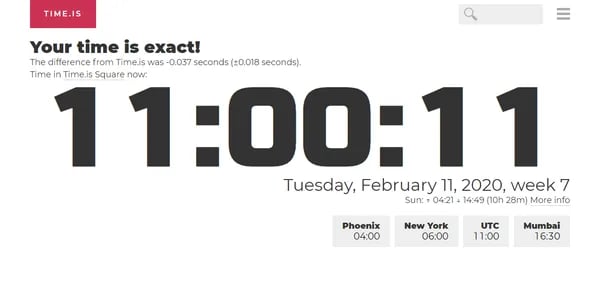
Platforms like Time.is exemplify the power and convenience of these modern tools. With a clean, user-friendly interface, Time.is provides exact, live local times for hundreds of major cities worldwide. Users can search for cities such as Abu Dhabi, Amsterdam, Buenos Aires, Cairo, Delhi, Dubai, Hong Kong, Istanbul, Moscow, New York, Paris, Sydney, Tokyo, and many more. Each city’s current local time is displayed alongside its UTC offset, making it easy to compare time differences and plan accordingly. The platform also automatically updates for daylight saving time (DST) changes, ensuring accuracy throughout the year.
The ability to pin locations and create personalized lists of cities is another feature that sets interactive time zone maps apart. This is particularly useful for professionals who work with international teams or travelers planning multi-city itineraries. By pinning frequently referenced cities, users can quickly check the current local time and make informed decisions without the need for manual calculations or cross-referencing multiple sources.
Moreover, these digital tools are not limited to present-day timekeeping. Many platforms offer access to historical time zone maps, allowing users to explore how time zones and UTC offsets have shifted over the decades. This feature is especially valuable for researchers, historians, and anyone interested in the evolution of global timekeeping practices.
Time conversion is another area where interactive tools excel. Users can effortlessly convert time between cities, accounting for partial-hour UTC offsets—such as those found in cities like Delhi (UTC+5:30) or Tehran (UTC+3:30)—and automatically adjusting for daylight saving changes. This eliminates confusion and reduces the risk of scheduling errors, which is crucial in today’s fast-paced, globalized environment.
James Lee, a tech developer, captures the essence of these advancements:
"Interactive time zone maps transform how we visualize and coordinate time, making international schedules manageable."His words highlight the profound impact these tools have had on both personal and professional time management.
In conclusion, the rise of Interactive Time Zone Maps and City Time Search platforms has fundamentally simplified the way we navigate global time. Whether you are a business professional scheduling a call between Berlin and Sydney, a traveler planning a journey from Los Angeles to Tokyo, or simply someone curious about the world, these tools provide immediate, reliable, and accurate information. By integrating real-time updates, seamless time conversion, and intuitive interfaces, platforms like Time.is empower users to bridge the temporal gaps that once separated us. As technology continues to evolve, our ability to connect across time zones will only become more effortless, making the world feel just a little bit smaller—and a lot more synchronized.